

Houthi Attack Raises Fears for Saudi Oil Pipeline as Global Supply Risks Escalate
Fresh reports of a possible Houthi strike near Saudi Arabia’s strategic East-West crude oil pipeline are raising concerns over another potential threat to global oil supplies, although there is currently no independent confirmation that the pipeline itself was hit. A large smoke plume was reportedly observed in the desert southeast of Medina near the general […]
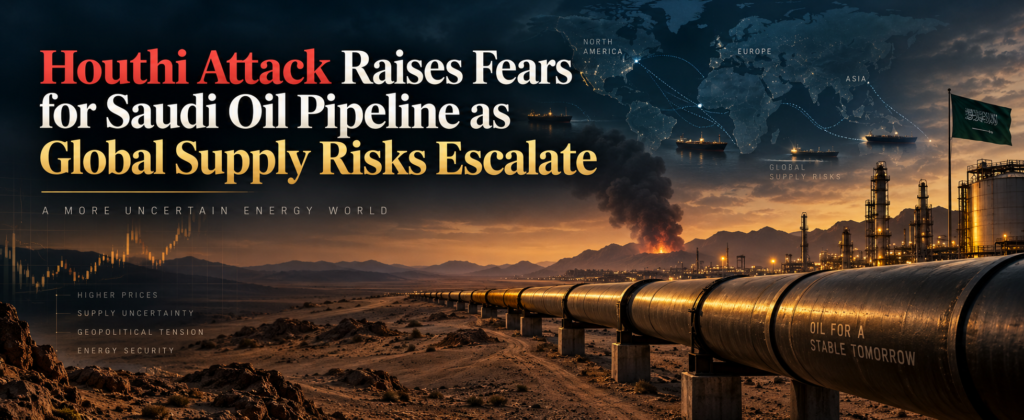
Fresh reports of a possible Houthi strike near Saudi Arabia’s strategic East-West crude oil pipeline are raising concerns over another potential threat to global oil supplies, although there is currently no independent confirmation that the pipeline itself was hit.
A large smoke plume was reportedly observed in the desert southeast of Medina near the general route of the 1,200-kilometre pipeline toward Mahd adh-Dhahab. NASA’s FIRMS satellite system also detected clustered thermal anomalies in the area. However, satellite fire detections can identify heat signatures without confirming what caused them or whether critical oil infrastructure was damaged.
Houthi-Saudi Conflict Raises Energy Security Risks
The reported incident comes after a major escalation between Iran-aligned Houthi forces in Yemen and Saudi Arabia.
On September 8, Houthi forces launched coordinated missile and drone attacks against several southern Saudi cities and energy facilities. Saudi authorities reported 73 injuries, while fires and temporary operational shutdowns were reported at some sites. Reuters said the attacks targeted areas including Abha, Khamis Mushait, Jazan and Najran.
The Houthis and Saudi-backed forces have since continued trading attacks, increasing the risk that the conflict could spread beyond individual facilities and threaten wider energy infrastructure.
That risk is particularly significant because Saudi Arabia is the world’s largest oil exporter and remains one of the most important sources of spare production capacity for global markets.
Why the East-West Pipeline Matters
Saudi Arabia’s East-West Pipeline, also known as the Petroline, stretches roughly 1,200 kilometres from the kingdom’s eastern oil-producing region to Yanbu on the Red Sea.
Its strategic importance has increased sharply because it provides Saudi Arabia with a route to move crude toward the Red Sea without relying entirely on tankers travelling through the Strait of Hormuz.
That makes the pipeline particularly valuable during the current regional crisis.
With shipping through the Strait of Hormuz already severely disrupted, any confirmed damage to the Petroline could create additional pressure on Saudi crude exports and global supply availability.
The pipeline has faced Houthi threats before. In July, the Houthis said they had targeted sensitive crude oil supply and transport sites linking eastern Saudi Arabia with Yanbu. Reuters reported at the time that Saudi Aramco had not immediately responded to requests for comment.
Oil Markets Face Another Supply Shock Risk
The potential pipeline incident comes at an especially sensitive moment for crude markets.
Oil prices are already above $100 a barrel as the wider Middle East conflict disrupts shipping and raises concerns about supply availability. Reuters reported on Friday that Brent crude was on track to finish the week above $100 for the first time since May, with both Brent and WTI posting weekly gains of more than 10%.
A confirmed strike on the East-West Pipeline could therefore add another layer of risk to an already fragile market.
Traders would likely focus on three questions: whether the pipeline suffered physical damage, whether Saudi crude exports have been affected, and how quickly alternative routes or spare capacity could compensate for any disruption.
Red Sea Risks Add to Hormuz Pressure
The pipeline concerns are also emerging alongside growing risks around the Red Sea and Bab el-Mandeb.
The Houthis have recently seized Yemen’s strategic port of Mocha, close to the Bab el-Mandeb Strait. Reuters said the waterway carries an estimated 7% of global oil output and remains an important route for energy and wider international trade.
This creates a potentially dangerous combination for global energy markets: disruption around Hormuz on one side of the Arabian Peninsula and increasing Houthi pressure around the Red Sea on the other.
What Investors Will Watch Next
For now, the alleged pipeline strike should be treated as an unconfirmed report, rather than a confirmed disruption to Saudi oil exports.
Markets will be watching for statements from Saudi authorities, Saudi Aramco and other official sources that could clarify whether the smoke and thermal signatures were connected to the pipeline.
If damage is confirmed, the impact could extend beyond crude prices. Higher oil costs could increase transportation and production expenses, reinforce global inflation pressures and complicate monetary-policy decisions for central banks.
With Brent already above $100, any additional threat to Saudi Arabia’s ability to move crude to global markets could make energy security an even bigger driver of financial-market volatility.
For now, the key issue is not simply whether the pipeline was targeted, but whether the latest Houthi escalation marks a broader shift toward attacks on the infrastructure that keeps Saudi oil flowing to international markets.

Alexander
Alexander is a veteran of the currency markets with over 15 years of experience in institutional trading and risk management. He specializes in the intersection of macroeconomics and regulatory frameworks.
