

Pakistan Warns Iran Over Houthi Attacks as Saudi Oil and Regional Security Risks Rise
Pakistan has warned Iran to rein in its Houthi allies in Yemen after a sharp increase in attacks on Saudi Arabia raised concerns over a wider regional security crisis and potential risks to energy markets. According to Reuters, Pakistan delivered the warning to Tehran as part of efforts to prevent the conflict from spreading further […]
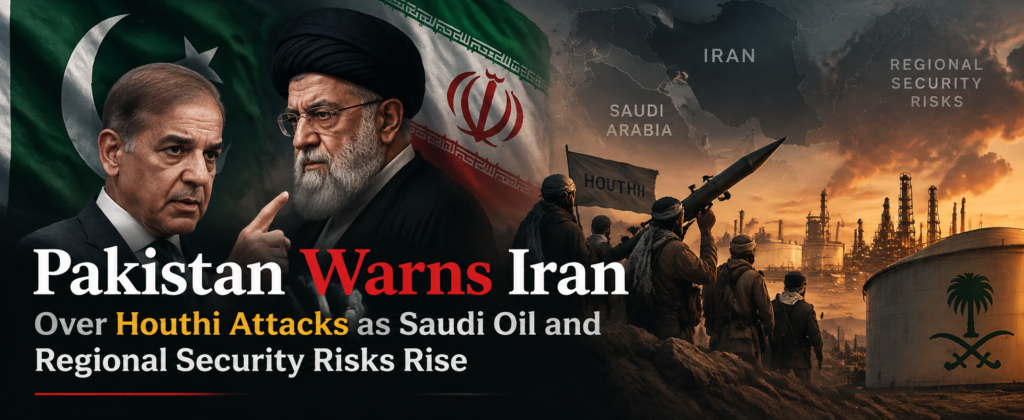
Pakistan has warned Iran to rein in its Houthi allies in Yemen after a sharp increase in attacks on Saudi Arabia raised concerns over a wider regional security crisis and potential risks to energy markets.
According to Reuters, Pakistan delivered the warning to Tehran as part of efforts to prevent the conflict from spreading further into Saudi territory. The warning follows a major Houthi attack on southern Saudi Arabia that targeted military and energy infrastructure and injured 73 people. Saudi Arabia has since responded with dozens of airstrikes against Houthi positions in Yemen.
Houthi Attacks Raise Saudi Oil Supply Concerns
The latest escalation is particularly significant for global financial markets because several of the Houthi attacks targeted economic and energy-related infrastructure in Saudi Arabia.
The attacks affected areas including Abha, Khamis Mushait, Jazan and Najran. Saudi authorities said 73 people were injured, while reports indicated that oil and industrial facilities were among the targets. The developments have renewed concerns about the security of Saudi Arabia’s energy infrastructure at a time when tensions across the Gulf are already putting pressure on global oil supplies.
Oil markets have already reacted strongly to the wider Middle East escalation. Brent crude has moved above the $100-a-barrel level amid concerns about disruptions to energy infrastructure and shipping routes. Further attacks on major oil facilities could increase the risk premium in crude prices and add to inflationary pressure across major economies.
Pakistan’s Defence Pact Adds to Regional Risks
Pakistan’s warning is also important because Islamabad recently strengthened its security relationship with Saudi Arabia and Turkiye through the Makkah Defence Alliance.
Pakistan’s Defence Minister Khawaja Asif said the agreement could become operational if the conflict in Yemen spills into Saudi territory. However, Pakistani officials have stressed that the agreement is defensive in nature and does not automatically mean Pakistani forces would enter Yemen or participate in offensive military operations.
Pakistan’s government has also publicly condemned the Houthi attacks and reaffirmed its support for Saudi Arabia’s sovereignty, territorial integrity and security. Islamabad has called for regional stability while maintaining that its defence commitments must be respected if Saudi territory comes under direct attack.
Iran Faces Pressure as Conflict Spreads
The latest developments increase pressure on Iran, which maintains close ties with the Houthi movement. Reuters reported that Iranian sources acknowledged Tehran’s support for the Houthis, while Pakistan’s message was aimed at preventing the group from expanding attacks against Saudi targets.
For regional markets, the main concern is whether the latest attacks remain concentrated around Yemen and Saudi Arabia or develop into a wider confrontation involving additional Gulf states.
A broader conflict could threaten important shipping and energy routes, including the Red Sea and the Strait of Hormuz. These routes are critical to global energy trade, meaning prolonged disruption could push crude prices higher and increase transportation and insurance costs.
Global Markets Watch Oil and Geopolitical Risk
The escalation comes at a sensitive time for investors. Higher oil prices could increase inflation expectations, complicate central-bank policy decisions and put pressure on economies that depend heavily on imported energy.
Gold could also benefit from renewed safe-haven demand if geopolitical tensions continue to rise, while currencies and equity markets may face increased volatility.
For now, investors are closely watching Saudi retaliation, Pakistan’s next steps and whether Iran takes action to restrain the Houthis. Any further attacks on Saudi energy infrastructure could quickly become a major market story rather than a purely regional security issue.
The immediate focus remains on whether diplomatic pressure can contain the conflict. If it fails, the combination of Houthi attacks, Saudi military retaliation and growing regional defence commitments could create a much broader threat to energy supplies and global markets.

Alexander
Alexander is a veteran of the currency markets with over 15 years of experience in institutional trading and risk management. He specializes in the intersection of macroeconomics and regulatory frameworks.
