

Nepal Flash Flood: Massive Flood Sweeps Through Northern Nepal
A catastrophic flash flood struck northern Nepal on August 26, 2026, after a sudden collapse of ice and rock in the Himalayan region triggered a powerful surge of water and debris. The disaster hit communities near the Nepal-China border, particularly in Rasuwa district, sweeping through villages, roads, bridges and infrastructure along major river corridors. The […]
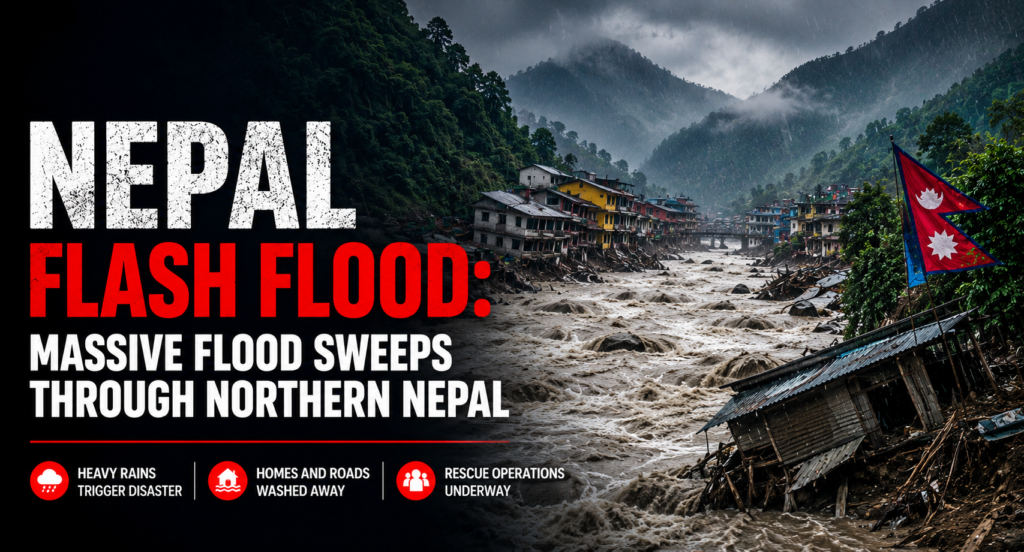
A catastrophic flash flood struck northern Nepal on August 26, 2026, after a sudden collapse of ice and rock in the Himalayan region triggered a powerful surge of water and debris. The disaster hit communities near the Nepal-China border, particularly in Rasuwa district, sweeping through villages, roads, bridges and infrastructure along major river corridors.
The rapidly developing disaster has caused a significant loss of life and left hundreds of people missing. International tourists and foreign nationals are among those unaccounted for, adding to the scale and complexity of the rescue operation.
What Caused the Nepal Flash Flood?
Initial reports suggested that an earthquake may have triggered the disaster. However, subsequent assessments indicated that the devastating event was associated with a major glacial ice and rock collapse in the Himalayan region. The resulting debris entered a river system and generated an exceptionally powerful flood downstream.
The floodwaters moved rapidly through steep mountain valleys, carrying mud, rocks and debris. The force was strong enough to destroy buildings and transportation infrastructure and severely disrupt communications in affected areas.
Scientists have also highlighted the increasing vulnerability of Himalayan environments to rising temperatures. Warmer conditions can contribute to glacier retreat, unstable slopes and changing conditions in high-altitude areas, potentially increasing the risk of sudden glacial and landslide-related disasters.
Death Toll and Missing People
The human impact of the Nepal flood remains severe, with authorities reporting at least 157 deaths in Nepal and additional fatalities in China’s Tibet region. Other reports have placed the combined death toll at around 160 or higher as rescue and recovery operations continue.
Hundreds of people remain missing. A particularly concerning aspect of the disaster is the number of foreign nationals and tourists who were in the region when the flooding occurred. Reports have indicated that hundreds of foreign visitors were among those unaccounted for, including people from India, the United States, Australia, Britain and Canada.
Because roads and communications have been damaged, authorities face difficulties establishing the full scale of casualties and locating missing people.
Major Damage to Roads, Bridges and Infrastructure
The flash flood caused extensive physical destruction across northern Nepal. Villages located close to river channels were exposed to torrents of water, mud and rocks.
Roads and bridges were damaged or swept away, making access to affected communities extremely difficult. Hydropower facilities and other infrastructure also suffered significant damage. Power and communication networks were disrupted in some areas, complicating coordination between emergency teams and residents.
The destruction of transportation routes is particularly important because Nepal’s mountainous geography already makes emergency access challenging. Rescue teams have had to rely heavily on helicopters and specialized equipment to reach isolated locations.
Rescue and Recovery Operations Underway
Nepali authorities have launched search-and-rescue operations involving emergency personnel and security forces. Rescue efforts are being conducted under difficult conditions because of damaged infrastructure, unstable terrain and the continuing risk of additional flooding or landslides.
Authorities are also working to identify missing foreign nationals and coordinate information with their respective governments. The scale of the disaster means that search operations could continue for an extended period as teams examine damaged settlements and river corridors.
International organizations and governments have also begun responding to the crisis, with humanitarian assistance expected to become increasingly important as affected communities require shelter, food, medical assistance and other essential supplies.
Why the Nepal Flood Matters to the Global Economy
Although the Nepal flash flood is primarily a humanitarian disaster, major natural disasters can also have broader economic consequences. Damage to roads, hydropower facilities and cross-border infrastructure can disrupt trade, tourism, transportation and regional economic activity.
Nepal’s proximity to China and India means that disruption around important border routes can affect regional commerce. The tourism sector could also face short-term pressure because the affected Himalayan region attracts international visitors and religious pilgrims.
For financial markets, disasters of this scale can become relevant when they affect commodities, infrastructure, tourism, government spending or regional currencies. Traders following Forex News should therefore monitor developments for potential secondary economic effects, particularly across South Asian markets.
Climate and Himalayan Disaster Risk
The latest disaster has renewed attention on the vulnerability of Himalayan communities to extreme environmental events. Glacial retreat, rising temperatures, unstable mountain slopes and changing precipitation patterns can create complex risks in high-altitude regions.
Experts have warned that Himalayan glaciers have been losing mass, while unstable ice and rock formations can create sudden hazards. The Nepal disaster demonstrates how an event occurring in a remote mountain environment can rapidly develop into a major humanitarian emergency downstream.
What Happens Next?
The immediate priority remains finding survivors, locating missing people and providing assistance to communities that have suffered extensive damage. Authorities will also need to assess destroyed infrastructure and determine how quickly critical roads, bridges, power systems and communication networks can be restored.
As rescue operations continue, the final death toll and economic cost of the disaster may increase. Governments and humanitarian agencies are expected to focus on emergency relief first, followed by reconstruction and longer-term measures designed to improve disaster preparedness in vulnerable Himalayan communities.
The Nepal flash flood is a stark reminder of the destructive power of sudden mountain hazards. It also highlights the importance of early-warning systems, resilient infrastructure and coordinated emergency planning in regions exposed to floods, landslides and glacial hazards.
