

Trump’s Iran War Escalates as Prolonged Conflict Raises Oil, Inflation and Global Market Risks
The conflict between the United States and Iran is entering a more complicated phase as economic pressure, military confrontation and disruptions to regional energy routes increasingly reinforce one another. A new Bloomberg Opinion commentary carried by CNA argues that President Donald Trump’s strategy of economic pressure against Tehran risks making the conflict broader and more […]
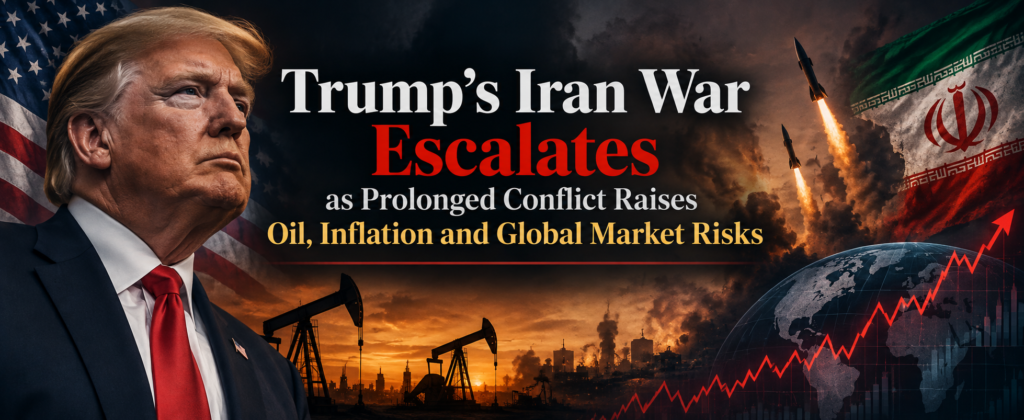
The conflict between the United States and Iran is entering a more complicated phase as economic pressure, military confrontation and disruptions to regional energy routes increasingly reinforce one another. A new Bloomberg Opinion commentary carried by CNA argues that President Donald Trump’s strategy of economic pressure against Tehran risks making the conflict broader and more disruptive rather than producing a quick resolution.
The market consequences are already visible. Oil prices have remained above $100 a barrel, while higher energy costs are feeding concerns about inflation and monetary policy. At the same time, investors are facing increased volatility across currencies, bonds and equities as markets prepare for another major Federal Reserve decision.
Iran Pressure Comes With Rising Economic Risks
Washington’s economic strategy has focused on restricting Iran’s ability to generate revenue and access international financial channels. The latest commentary argues that while such pressure can weaken Iran economically, it may also increase the incentive for Tehran and its regional allies to accept greater military and economic risks.
That dynamic is particularly important for financial markets because Iran does not need to directly disrupt global oil production to influence prices. Threats to shipping routes, attacks on energy infrastructure and pressure around key chokepoints can increase the risk premium embedded in crude prices.
The Strait of Hormuz remains at the centre of that risk. Recent disruptions have coincided with attacks on shipping and Saudi energy infrastructure, while diplomatic efforts surrounding safe passage through the waterway have remained uncertain. Reuters reported that Brent surged above $108 amid renewed geopolitical tensions and supply disruptions.
Oil Shock Raises Inflation Concerns
Crude oil has become one of the most important transmission channels from the Iran conflict to the wider global economy.
Brent crude has climbed sharply in September, while WTI has also remained above $100. The increase raises the cost of transportation, fuel and industrial inputs, potentially keeping inflation higher for longer. Market analysts have warned that further escalation could push crude prices materially higher if additional supply routes are disrupted.
That creates a difficult environment for central banks. Higher oil prices can slow economic growth by increasing costs for households and businesses, but they can simultaneously make it harder for policymakers to bring inflation back toward target.
Federal Reserve Faces a More Complicated Backdrop
The energy shock arrives just before the Federal Reserve’s September policy decision. Markets are currently pricing a very high probability of a quarter-point rate increase, with Reuters reporting a probability of around 93%. The US 10-year Treasury yield has also climbed above 5%, reaching its highest level since 2007.
A combination of stronger oil prices, persistent inflation and elevated Treasury yields can provide support for the US dollar while putting pressure on risk-sensitive assets.
For the Fed, the key question is whether the latest increase in energy prices represents a temporary shock or develops into a broader inflation problem. A prolonged conflict would make that assessment more difficult.
Dollar and Global Markets Remain Under Pressure
The dollar has strengthened as investors seek defensive assets and reassess interest-rate expectations. The euro has moved toward a one-month low near $1.1535, while the yen has weakened toward 154.91 per dollar as markets also prepare for the Bank of Japan’s upcoming decision.
Higher US yields and geopolitical uncertainty can also weigh on emerging-market currencies and equities. Indian markets, for example, are already dealing with pressure from oil above $100 and a weaker rupee. Reuters said the Indian currency closed around 95.55 per dollar last week, while domestic bonds also faced rising yields.
US equities are facing a separate challenge from rising AI-sector concerns, but higher oil and borrowing costs could further complicate the outlook for technology and growth stocks.
What Markets Will Watch Next
The biggest market catalysts will remain oil prices, developments around Hormuz, US sanctions, diplomatic negotiations and the Federal Reserve’s policy guidance.
If the conflict continues through the coming months, as the latest commentary suggests is possible, investors could face a prolonged period of elevated energy prices and greater cross-asset volatility.
For now, the Iran conflict is no longer only a geopolitical issue. Its impact is increasingly visible in crude markets, inflation expectations, Treasury yields, the US dollar and global equity risk. A sustained escalation could make the economic cost of the conflict considerably larger, even without a direct disruption to all regional oil production.

Alexander
Alexander is a veteran of the currency markets with over 15 years of experience in institutional trading and risk management. He specializes in the intersection of macroeconomics and regulatory frameworks.
