

Apple Leadership Shift: Tim Cook Gets $47 Million Package as John Ternus Takes Over as CEO
Apple has entered a major leadership transition as Tim Cook steps down as chief executive after 15 years and moves into the role of executive chairman, while longtime hardware chief John Ternus takes over as CEO. The leadership change marks a new chapter for the technology giant as it faces increasing pressure to strengthen its […]
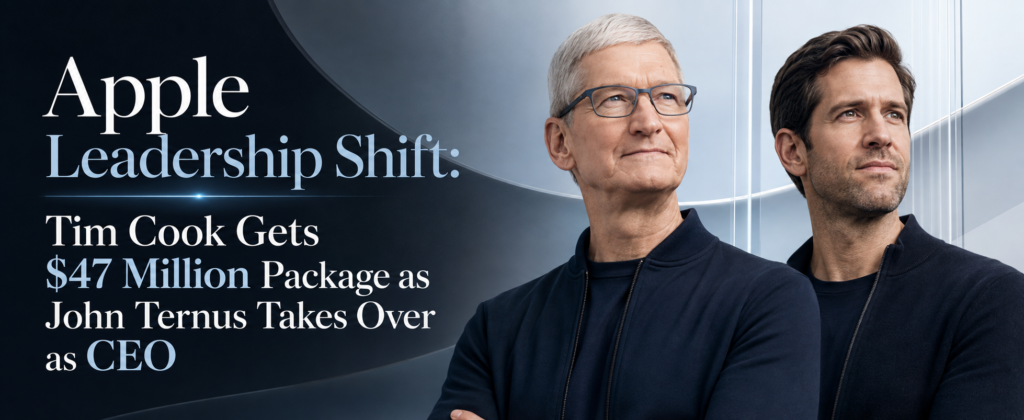
Apple has entered a major leadership transition as Tim Cook steps down as chief executive after 15 years and moves into the role of executive chairman, while longtime hardware chief John Ternus takes over as CEO. The leadership change marks a new chapter for the technology giant as it faces increasing pressure to strengthen its artificial intelligence strategy and manage geopolitical and supply-chain challenges.
The transition became effective on September 1, with Apple disclosing new compensation arrangements for both executives. Cook will receive an annual salary of $2 million as executive chairman, alongside a targeted equity award worth $45 million, bringing the potential value of his new annual compensation package to approximately $47 million. Ternus, meanwhile, will receive a $3 million annual salary and a target equity award valued at $55 million beginning in 2027.
Tim Cook Leaves a Much Larger Apple
Cook’s departure from the CEO role closes one of the most successful corporate leadership periods in modern technology. When he became CEO in 2011, Apple was valued at roughly $350 billion. Under his leadership, the company’s market value expanded to more than $4.5 trillion, while annual sales increased from approximately $108 billion to $416 billion.
Much of Cook’s success was built around Apple’s supply chain, operational efficiency and expansion of services beyond hardware. The company’s large installed base of iPhone users also helped create a recurring revenue business through services, strengthening Apple’s financial performance.
However, Cook’s tenure has also faced criticism over Apple’s progress in emerging technologies. The company has struggled to establish a clear leadership position in artificial intelligence, while projects such as its electric vehicle initiative were eventually abandoned. Apple’s Vision Pro headset also failed to generate the level of commercial momentum initially expected.
John Ternus Faces an AI Challenge
As Apple’s new CEO, Ternus inherits a company with enormous financial strength but significant strategic challenges. His most important task will be convincing investors and consumers that Apple can remain competitive as artificial intelligence becomes increasingly important across the technology industry.
Apple’s AI development, including its efforts to improve Siri and integrate AI more deeply into its products, has faced delays. Competitors have moved aggressively to incorporate generative AI into smartphones, software and cloud services.
Ternus will therefore need to determine how AI can become a central part of Apple’s product ecosystem rather than simply another feature added to existing devices.
China and Supply Chains Remain Important
Apple’s international supply chain is another major challenge. The company has historically depended heavily on China for manufacturing, but rising US-China tensions, tariffs and geopolitical uncertainty have encouraged Apple to diversify production.
Apple has been increasing manufacturing activity in countries including India and Vietnam. Reuters reported that Apple was working toward producing most iPhones destined for the US market in India by the end of 2026, while Vietnam has become important for the assembly of products such as AirPods and iPads.
Cook’s new executive chairman role could allow Apple to continue benefiting from his experience with supply chains and government relations, particularly as US-China relations remain complicated.
What It Means for Investors and Global Markets
The leadership change is particularly important for investors because Apple is one of the world’s largest publicly traded companies. Changes in Apple’s AI strategy, manufacturing footprint and China exposure could influence expectations for revenue growth, margins and future investment.
For financial markets, Apple’s performance can also affect broader technology-sector sentiment. Strong AI execution or improving supply-chain efficiency could support Apple shares and wider technology stocks. Conversely, continued AI delays, higher tariffs or geopolitical disruptions could increase concerns about costs and future growth.
For the Forex market, the story is less direct but still relevant. Apple is a major participant in global trade and technology supply chains, meaning changes in US-China trade relations, Asian manufacturing and global investor sentiment can influence broader currency and risk-market dynamics.
With Cook moving to the boardroom and Ternus taking control of day-to-day leadership, investors will now watch closely to see whether Apple can maintain its extraordinary financial performance while closing the gap in artificial intelligence.
