

Asian Markets Slide as US-Iran Escalation Pushes Oil Higher and Fuels Inflation Fears
Asian markets came under heavy pressure on Wednesday as renewed US-Iran military clashes pushed oil prices higher and intensified concerns about inflation, interest rates and global economic growth. The latest escalation has increased fears that disruptions to energy supplies could persist, putting additional pressure on economies that rely heavily on imported crude. The sell-off followed […]
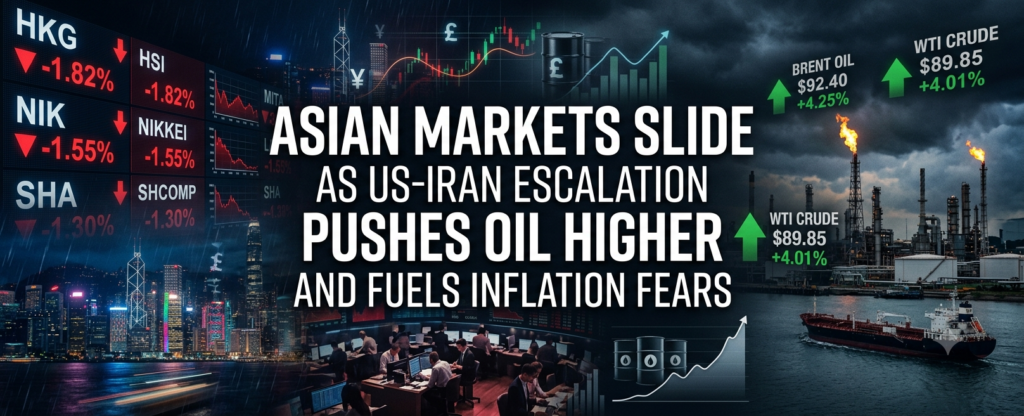
Asian markets came under heavy pressure on Wednesday as renewed US-Iran military clashes pushed oil prices higher and intensified concerns about inflation, interest rates and global economic growth. The latest escalation has increased fears that disruptions to energy supplies could persist, putting additional pressure on economies that rely heavily on imported crude.
The sell-off followed renewed US strikes on Iran and retaliatory attacks by Tehran against US-linked targets in the Middle East. Investors quickly shifted toward a more cautious stance as the conflict raised the possibility of further disruption around the Strait of Hormuz, one of the world’s most important energy transit routes.
Asian Stocks Fall as Oil Prices Surge
The MSCI Asia-Pacific index fell around 2%, while major regional markets recorded significant losses. South Korea’s KOSPI dropped nearly 4%, Japan’s Nikkei 225 declined about 2.9%, and other Asian markets also moved lower as investors assessed the economic consequences of higher energy prices.
Indian equities also opened lower. The Nifty 50 declined around 0.89%, while the Sensex fell approximately 0.79% during early trading. The decline came as rising crude prices increased concerns over inflation and the potential impact on corporate costs and consumer demand.
The weakness was broad-based, with multiple sectors coming under selling pressure. Investors are particularly concerned that a prolonged rise in energy prices could weaken economic growth while simultaneously increasing inflation.
Oil Nears $95 as Hormuz Risks Grow
Brent crude climbed to around $95.45 per barrel after reaching a five-week high earlier in the session. The sharp move reflects growing concerns that the renewed US-Iran confrontation could disrupt oil flows through the Strait of Hormuz.
The Strait of Hormuz is strategically important for global energy markets. Any sustained disruption to shipping through the waterway could reduce available supplies and force traders to price in a larger geopolitical risk premium.
For Asian economies, the impact could be particularly significant because many countries in the region are major energy importers. Higher crude prices can increase transportation, manufacturing and electricity costs, potentially worsening inflationary pressures.
Bond Yields Raise Rate-Hike Concerns
The oil shock is also affecting global bond markets. The US 10-year Treasury yield climbed to around 4.81%, its highest level in almost three years, as investors reassessed the inflation outlook and the possibility of tighter monetary policy. Japan’s 10-year government bond yield also moved to a multi-decade high.
Higher Treasury yields can make US assets more attractive relative to emerging-market investments. This can put additional pressure on Asian currencies and equity markets by encouraging capital flows toward dollar-denominated assets.
The renewed inflation concerns could also complicate decisions for central banks. Policymakers face a difficult balance between supporting economic growth and preventing higher energy costs from becoming embedded in consumer prices.
Forex and Gold Markets Remain Volatile
The latest developments are particularly important for Forex traders. The US dollar index rose to its highest level since mid-August as investors sought liquidity and reassessed interest-rate expectations. Asian currencies, particularly those of major oil-importing economies, face additional pressure from higher crude prices and rising US yields.
Gold has also behaved differently from the traditional safe-haven pattern. Despite heightened geopolitical tensions, bullion moved lower as stronger Treasury yields and a firmer dollar reduced its appeal. Gold prices fell to their lowest level in more than two weeks during Wednesday trading.
What Traders Should Watch
Markets will now closely monitor the next developments in the US-Iran conflict, particularly any disruption to oil shipments through the Strait of Hormuz. Further military escalation could push crude prices even higher and increase pressure on inflation-sensitive assets.
For Forex and global-market traders, the key indicators to watch are oil prices, US Treasury yields, the US dollar, gold and Asian currencies. A sustained rise in energy prices could keep inflation expectations elevated and increase the possibility of tighter monetary policy.
Until there is greater clarity over the conflict, Asian equities and global financial markets are likely to remain highly sensitive to every major US-Iran development.
