
China Warns It Will Protect Its Interests After US Widens Sanctions Against Iran
China has warned that it will take necessary measures to protect its legitimate economic interests after the United States expanded sanctions targeting Iran and businesses involved in trade with Tehran. The latest development is increasing tensions between Washington and Beijing while adding another layer of uncertainty to global financial and currency markets. The US announced […]
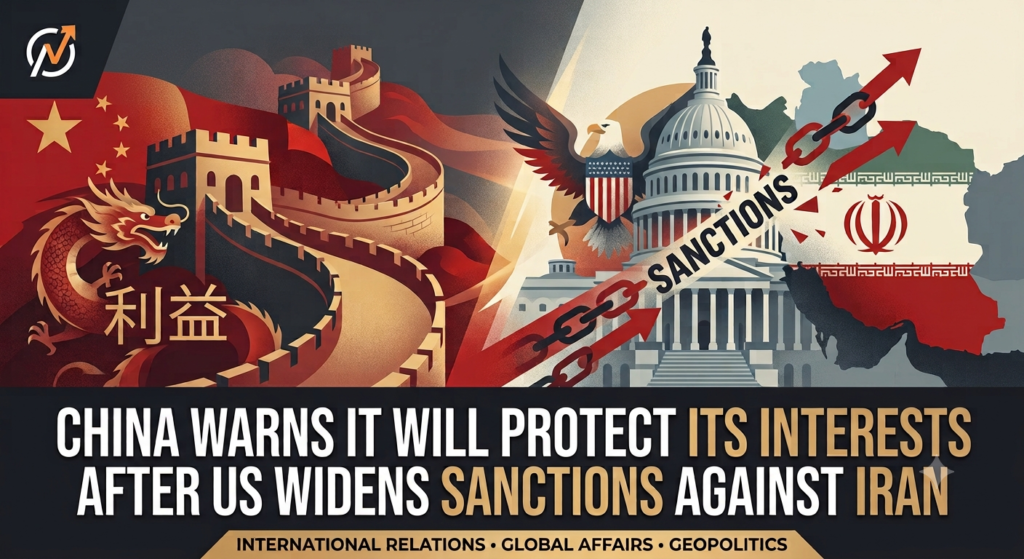
China has warned that it will take necessary measures to protect its legitimate economic interests after the United States expanded sanctions targeting Iran and businesses involved in trade with Tehran. The latest development is increasing tensions between Washington and Beijing while adding another layer of uncertainty to global financial and currency markets.
The US announced a broader sanctions campaign on August 24 aimed at cutting off Iran’s economic lifelines. US Treasury Secretary Scott Bessent warned countries and companies involved in business with Iran that they could face consequences under Washington’s secondary sanctions regime.
China, one of Iran’s most important economic partners and a major buyer of Iranian crude oil, has strongly criticised the use of unilateral sanctions. Beijing said it would closely monitor developments and take measures necessary to safeguard its rights and interests.
China Warns Against Further US Pressure
China’s Foreign Ministry said sanctions and economic pressure are not an effective way to resolve international disputes. Beijing urged all parties to remain rational and restrained, warning that continued pressure could increase tensions rather than encourage a diplomatic solution.
The warning is significant because China’s economic relationship with Iran makes Beijing particularly exposed to the latest US measures. Any restrictions affecting Chinese companies, banks, shipping firms or oil buyers could create additional friction between the world’s two largest economies.
The United States has already targeted dozens of entities connected to Iran’s nuclear, missile, cyber and oil-related activities. Washington has also warned that countries continuing significant commercial relationships with Tehran could face restrictions on access to the US dollar-based financial system.
Why Iran’s Oil Trade Matters to China
China plays a major role in Iran’s oil trade and has continued purchasing Iranian crude despite years of US sanctions. This makes the latest American measures particularly important for global energy markets and international currency trading.
According to recent reporting, Chinese buyers have remained an important outlet for Iranian oil exports. However, tighter enforcement and the threat of secondary sanctions could make transactions more difficult, potentially affecting shipping, insurance, payments and commodity flows.
For the forex market, changes in oil supply and geopolitical risk can have a direct impact on currencies. Higher energy prices can increase inflationary pressure in oil-importing economies, while oil-exporting countries may benefit from stronger energy revenues.
Potential Impact on Forex Markets
The escalation between the US, China and Iran could create additional volatility across major currency pairs.
The US dollar could experience increased demand during periods of geopolitical uncertainty because investors often move toward highly liquid and traditionally defensive assets. However, stronger tensions involving China could also create pressure on Asian currencies and increase demand for safe-haven assets.
The Chinese yuan could face additional volatility if sanctions begin affecting Chinese companies involved in Iranian trade. Markets will closely watch whether Beijing introduces countermeasures or whether Washington expands sanctions to larger Chinese financial institutions.
Oil prices will also remain important for forex traders. The Strait of Hormuz is a critical global energy route, and continued instability in the region could affect crude oil supply expectations. Recent tensions around the waterway have already increased concerns about energy security.
US-China Tensions Add to Market Uncertainty
The latest sanctions dispute comes at a sensitive time for US-China relations. Washington appears to be attempting to increase economic pressure on Iran without immediately triggering a much larger confrontation with Beijing.
Recent US sanctions have targeted Chinese-linked entities, but major Chinese financial institutions have so far been treated more cautiously. This suggests Washington is attempting to balance pressure on Iran with the broader economic and diplomatic relationship between the US and China.
For traders, this creates an important risk factor. Any escalation between Washington and Beijing could affect the dollar, yuan, commodities and broader global risk sentiment.
What Forex Traders Should Watch Next
Forex traders should closely monitor developments involving US secondary sanctions, China’s potential response and Iran’s oil exports.
Key factors to watch include:
- Further US sanctions against Chinese companies or banks
- China’s potential retaliatory measures
- Changes in Iranian oil exports to China
- Developments around the Strait of Hormuz
- Crude oil price movements
- US dollar and Chinese yuan volatility
- Any progress toward US-Iran diplomatic negotiations
The situation remains highly fluid, meaning markets could react quickly to new sanctions announcements or diplomatic developments.
Conclusion
China’s warning that it will protect its interests marks another important escalation in the economic confrontation surrounding Iran. The United States is seeking to increase pressure on Tehran by targeting its international trading network, while China is signalling that it will defend its economic relationship with Iran.
For the Forex market, the dispute is important because it combines geopolitical risk, energy-market uncertainty and growing US-China tensions. Traders should therefore monitor the US dollar, Chinese yuan, oil prices and broader risk sentiment as the sanctions campaign develops.
The immediate market impact may remain limited if Washington avoids directly targeting major Chinese financial institutions. However, a broader confrontation between the US and China could significantly increase volatility across global financial markets.
