

Gold Falls as Oil Surge Strengthens Fed Rate-Hike Bets Ahead of Decision
Gold prices came under renewed pressure on Monday as a sharp rise in oil prices intensified inflation concerns and strengthened expectations that the US Federal Reserve could raise interest rates at its September policy meeting. Spot gold fell around 0.9% to $4,308.24 per ounce by 0907 GMT, while US gold futures declined 1.4% to $4,348.50. […]
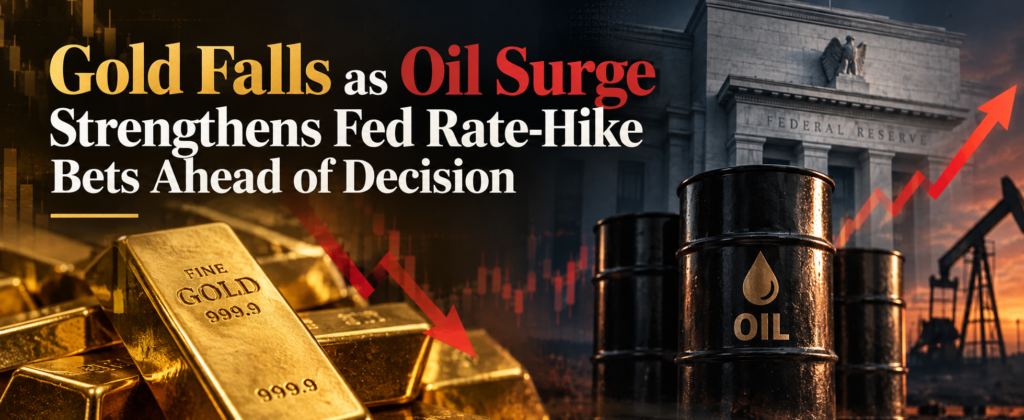
Gold prices came under renewed pressure on Monday as a sharp rise in oil prices intensified inflation concerns and strengthened expectations that the US Federal Reserve could raise interest rates at its September policy meeting.
Spot gold fell around 0.9% to $4,308.24 per ounce by 0907 GMT, while US gold futures declined 1.4% to $4,348.50. The latest move came after gold recorded its third consecutive weekly decline, highlighting the growing pressure from higher interest-rate expectations and a firmer US dollar.
The decline comes at a critical point for global markets, with the Federal Reserve scheduled to announce its latest interest-rate decision on Wednesday.
Oil Rally Revives Inflation Concerns
The biggest new challenge for gold is the renewed surge in energy prices.
Oil prices climbed around 3% on Monday as fresh attacks on Saudi Arabian energy and civilian infrastructure, Iranian attacks on ships in the Gulf and the closure of a key Saudi oil pipeline increased concerns about global supply.
Higher crude prices can feed directly into transportation, manufacturing and consumer costs. For central banks, that creates a difficult policy environment because persistent energy inflation can make it harder to reduce interest rates.
The latest oil rally has therefore changed the market’s expectations for the Federal Reserve. Instead of focusing only on economic growth, investors are increasingly concerned that higher energy prices could keep US inflation elevated.
Fed Rate-Hike Bets Jump Ahead of Decision
US inflation data released last week added to the pressure on the Fed.
Consumer prices accelerated in August, while a key measure of underlying inflation recorded its largest increase in four months. Following the data, traders sharply increased expectations for a rate increase at this week’s Federal Reserve meeting.
According to the CME FedWatch Tool, markets were pricing roughly an 89% probability of a Fed rate hike, up from approximately 67% before the latest inflation figures.
Major financial institutions including Goldman Sachs and HSBC are also expecting the Fed to raise interest rates by 25 basis points at the September meeting.
For gold, this is a significant headwind because the metal does not generate interest income. When government bond yields and interest rates rise, investors may find yield-bearing assets relatively more attractive than bullion.
Stronger Dollar Adds Pressure on Gold
The US dollar also strengthened to its highest level in more than a week, creating another obstacle for gold.
Gold is priced internationally in US dollars, meaning a stronger dollar can make bullion more expensive for buyers using other currencies. This can reduce international demand and add further downward pressure to prices.
The combination of a stronger dollar, higher yields and rising rate expectations has therefore created a challenging short-term environment for gold.
UBS analyst Giovanni Staunovo said the renewed rise in oil prices could reinforce inflation concerns and keep the Federal Reserve on a more hawkish footing.
Middle East Tensions Keep Safe-Haven Demand Alive
Despite the bearish rate outlook, gold continues to retain an important support factor: geopolitical uncertainty.
New attacks involving Saudi Arabia, Iran and shipping routes in the Gulf are keeping investors focused on potential disruptions to global energy supplies. The postponement of a meeting between Iran and other Gulf powers has also raised concerns that diplomatic efforts could face further difficulties.
Normally, geopolitical tensions can increase demand for gold as a traditional safe-haven asset. However, the current environment is unusual because the same geopolitical shock is simultaneously pushing oil prices higher and increasing expectations for tighter monetary policy.
That creates conflicting forces for bullion.
What Traders Should Watch Next
The Federal Reserve’s September decision will be the immediate focus for gold and broader financial markets.
A 25-basis-point rate increase may already be largely reflected in market prices, meaning traders will pay close attention to the Fed’s guidance on future policy. Any indication that higher energy prices could delay rate cuts or require additional tightening could strengthen the dollar and weigh further on gold.
On the other hand, a less hawkish message could allow gold to recover, particularly if geopolitical risks remain elevated.
Oil prices will also remain critical. If crude continues to rise because of disruptions in the Middle East, inflation expectations could increase further and keep pressure on the Federal Reserve.
For now, gold faces a difficult combination of higher oil prices, stronger Fed rate-hike expectations and a firmer US dollar. With the Fed decision approaching, volatility across gold, currencies, bonds and commodities is likely to remain elevated.

Alexander
Alexander is a veteran of the currency markets with over 15 years of experience in institutional trading and risk management. He specializes in the intersection of macroeconomics and regulatory frameworks.
