
Iran-US Diplomacy Stalls as Mediation Dispute Raises Fresh Oil Market Risks
Efforts to find a diplomatic path between Iran and the United States face renewed uncertainty after Tehran said a lack of effective US mediation has become a major obstacle to diplomacy. The latest development comes as the Middle East conflict continues to disrupt energy markets and push crude oil prices sharply higher. Iran’s latest comments […]
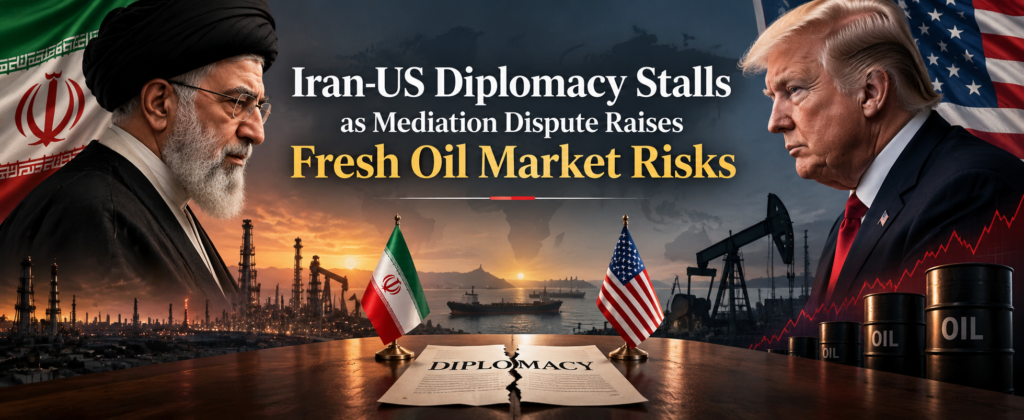
Efforts to find a diplomatic path between Iran and the United States face renewed uncertainty after Tehran said a lack of effective US mediation has become a major obstacle to diplomacy. The latest development comes as the Middle East conflict continues to disrupt energy markets and push crude oil prices sharply higher.
Iran’s latest comments highlight the difficulty of restarting meaningful negotiations while military tensions remain elevated. US President Donald Trump has reiterated that he expects the war with Iran to end this year, but the absence of a clear diplomatic breakthrough is keeping markets focused on the risk of further escalation.
For investors, the diplomatic deadlock is important because any deterioration in US-Iran relations could have direct consequences for oil supplies, shipping routes and inflation expectations.
Diplomacy Becomes a New Market Risk
The latest comments from Tehran come at a particularly sensitive moment for global markets.
Oil prices have already moved sharply higher as attacks on Saudi infrastructure and disruptions around key maritime routes raise concerns over future energy supplies. Brent crude climbed around 3% on Monday to approximately $108 a barrel, while the US dollar strengthened as investors moved towards traditional safe-haven assets.
A prolonged diplomatic stalemate could therefore add another layer of risk to an already unstable energy market.
Markets generally respond positively when geopolitical tensions show signs of easing because the probability of supply disruptions declines. Conversely, stalled negotiations can encourage traders to maintain a higher geopolitical risk premium in crude prices.
Strait of Hormuz Remains a Major Concern
The most important transmission channel between Iran-US tensions and global financial markets remains the Strait of Hormuz.
The waterway is one of the world’s most important energy corridors, and ongoing uncertainty surrounding its operation has already affected oil traders, refiners and shipping companies.
Recent reports indicate that Asian oil traders are preparing for a prolonged period of elevated prices as the conflict continues to disrupt regional supply channels. Physical oil markets have also shown signs of tightening, with premiums for several grades rising sharply.
Any further deterioration in the diplomatic situation could therefore increase concerns about shipping through Hormuz and potentially push crude prices higher.
Oil Prices Could Keep Inflation Elevated
The oil-market reaction matters well beyond the energy sector.
Higher crude prices increase costs across transportation, manufacturing and logistics. If those increases persist, they can feed into consumer inflation and make it harder for central banks to ease monetary policy.
That risk is particularly important for the United States this week because the Federal Reserve is preparing for its September policy decision.
Markets are currently pricing a very high probability of a Fed rate increase, while the rise in oil prices is adding to concerns that inflation could remain elevated. Reuters reported that money markets were assigning around a 90% probability to a rate increase on Wednesday.
This creates a complicated environment for policymakers: weaker economic activity may argue for easier monetary policy, but an energy-driven inflation shock could encourage a more cautious approach.
Dollar and Gold React to Geopolitical Uncertainty
The diplomatic uncertainty is also influencing currency and precious-metal markets.
The US dollar strengthened on Monday as investors sought safety amid rising geopolitical tensions. The dollar’s appeal was reinforced by higher oil prices and expectations of tighter US monetary policy.
Gold, meanwhile, has faced conflicting forces. Geopolitical uncertainty normally supports safe-haven demand for bullion, but higher oil prices and stronger expectations for US interest rates can weigh on gold by increasing yields and supporting the dollar.
This means the next stage of the Iran-US diplomatic process could have implications across USD, gold, oil and global bond markets.
Houthi Escalation Adds to the Pressure
The diplomatic uncertainty is occurring alongside a widening regional conflict involving Yemen’s Houthi movement.
The Houthis have recently expanded their control around important Red Sea shipping routes and intensified attacks on Saudi infrastructure. The latest developments have increased concerns about the Bab al-Mandeb Strait, another critical route for global energy transportation.
With risks emerging around both Bab al-Mandeb and Hormuz, traders are increasingly concerned that disruptions could persist across multiple energy corridors at the same time.
What Traders Should Watch Next
The immediate focus will be on whether Iran and the United States can restore a credible diplomatic channel and whether regional mediators can reduce tensions.
A meaningful breakthrough could quickly reduce the geopolitical premium in oil prices and support risk-sensitive assets. However, continued diplomatic failure combined with further attacks on energy infrastructure or shipping routes could push crude prices higher and increase inflation concerns.
For financial markets, the key relationship to watch is therefore:
Iran-US diplomacy → Middle East escalation risk → oil prices → inflation expectations → Fed policy → dollar and global markets.
Until there is clearer evidence of a diplomatic breakthrough, investors are likely to remain cautious. With Brent already around $108 a barrel and the Federal Reserve decision approaching, any new development involving Iran, US negotiations or regional shipping could trigger significant volatility across commodities, currencies and bonds.

Alexander
Alexander is a veteran of the currency markets with over 15 years of experience in institutional trading and risk management. He specializes in the intersection of macroeconomics and regulatory frameworks.
