

Iran says it is ‘fully Prepared’ to Counter widened US Economic sanctions
The geopolitical standoff between the United States and Iran has entered a new phase after Washington announced a broader package of economic sanctions targeting Tehran’s financial, shipping, technology, and energy-related networks. In response, Iran has declared that it is “fully prepared” to counter the expanded sanctions and warned that it has its own economic and […]
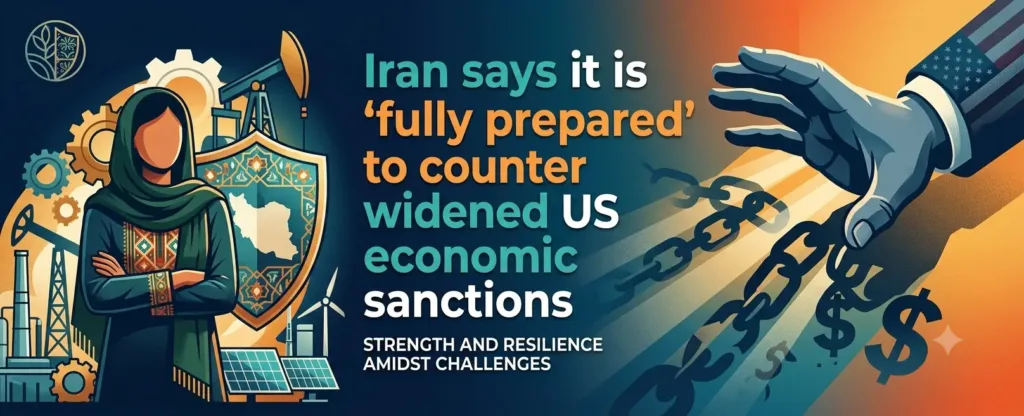
The geopolitical standoff between the United States and Iran has entered a new phase after Washington announced a broader package of economic sanctions targeting Tehran’s financial, shipping, technology, and energy-related networks. In response, Iran has declared that it is “fully prepared” to counter the expanded sanctions and warned that it has its own economic and strategic tools to respond.
The latest measures are expected to increase pressure on Iran’s already struggling economy while also raising concerns across global financial markets, oil prices, and the foreign exchange (Forex) market.
US Expands Sanctions in New Economic Pressure Campaign
The Trump administration has launched a new sanctions strategy aimed at tightening economic restrictions on Iran. According to US Treasury officials, the measures target more than 60 individuals, companies, and vessels allegedly linked to Iran’s oil trade, missile program, cyber operations, and sanctions-evasion networks.
The new sanctions also broaden the risk of secondary sanctions, meaning countries and companies that continue doing business with Iran could face restrictions on access to the US dollar financial system. However, Washington has temporarily avoided imposing direct penalties on major Chinese banks, giving international trading partners time to comply.
Iran Responds: “We Are Fully Prepared”
Iranian Economy Minister Ali Madanizadeh said the country is ready to face the latest round of economic restrictions. Speaking on Iranian state television, he argued that Iran has developed experience in dealing with decades of sanctions and is prepared to respond with both defensive and offensive economic measures.
Iranian Parliament Speaker Mohammad Bagher Ghalibaf also dismissed Washington’s pressure campaign, claiming that Iran’s major trading partners would not abandon economic cooperation with Tehran. He suggested that countries including China and Russia have shown little interest in supporting the US-led sanctions effort.
Military and Economic Retaliation Remains on the Table
Iranian officials have warned that economic pressure could trigger broader regional consequences. Military representatives from Iran’s Revolutionary Guard have indicated that if the country’s infrastructure or economy is further targeted, Iran could respond by threatening strategic energy routes, including the Strait of Hormuz.
The Strait of Hormuz is one of the world’s most important oil shipping corridors, carrying a significant share of global crude oil exports. Any disruption could have immediate consequences for energy markets and international trade.
Why the Sanctions Matter for Forex Markets
For currency traders, the latest sanctions represent more than a geopolitical headline. They have the potential to influence several major financial markets.
Key Forex Market Impacts
- Increased demand for safe-haven currencies such as the US Dollar (USD) and Swiss Franc (CHF).
- Higher volatility in oil-linked currencies, including the Canadian Dollar (CAD) and Norwegian Krone (NOK).
- Potential pressure on emerging market currencies if energy prices continue rising.
- Increased uncertainty for global trade and international investment flows.
Analysts believe that if tensions continue to escalate, Forex markets could experience sharper price swings, particularly during periods of geopolitical uncertainty.
Oil Prices and Global Economic Concerns
The sanctions arrive at a time when global energy markets remain fragile. Iran is a significant oil producer, and restrictions on its exports could tighten global supply if enforcement becomes stricter. At the same time, uncertainty surrounding shipping routes in the Gulf continues to support higher oil prices.
Higher oil prices generally contribute to inflationary pressure worldwide, which can influence central bank decisions and currency valuations across major economies.
China and Other Trading Partners Under Pressure
One of the biggest questions surrounding the new sanctions is how China, Iran’s largest oil customer, will respond. US officials have warned that countries continuing financial or commercial relations with Iran could face additional restrictions in the future.
Beijing has repeatedly opposed unilateral sanctions and has stated that it will continue protecting its legitimate economic interests. This creates additional uncertainty for global commodity markets and international trade.
Frequently Asked Questions (FAQs)
1. Why did the US expand sanctions on Iran?
The United States expanded sanctions to increase economic pressure on Iran by targeting its financial networks, shipping, technology, and oil-related activities.
2. How has Iran responded to the new sanctions?
Iran says it is fully prepared to counter the sanctions and has warned that it may respond through economic, diplomatic, and potentially strategic measures.
3. Will the new sanctions affect Forex markets?
Yes. The sanctions could increase volatility in the Forex market, particularly for safe-haven currencies, oil-linked currencies, and emerging market currencies.
4. Why is the Strait of Hormuz important?
The Strait of Hormuz is one of the world’s busiest oil shipping routes. Any disruption there could significantly impact global oil prices and financial markets.
5. What should Forex traders watch after this news?
Forex traders should monitor oil prices, US-Iran diplomatic developments, China’s response to sanctions, and any changes in global market risk sentiment.
