

Two Saudi Oil Tankers Hit in Strait of Hormuz as Iran Conflict Raises Global Supply Risks
Two large oil tankers carrying Saudi crude were struck by unidentified projectiles while travelling through the Strait of Hormuz, adding another major threat to one of the world’s most important energy corridors and increasing concerns over global oil supplies. The incidents occurred within minutes of each other near Khasab, Oman, according to Reuters. The vessels […]
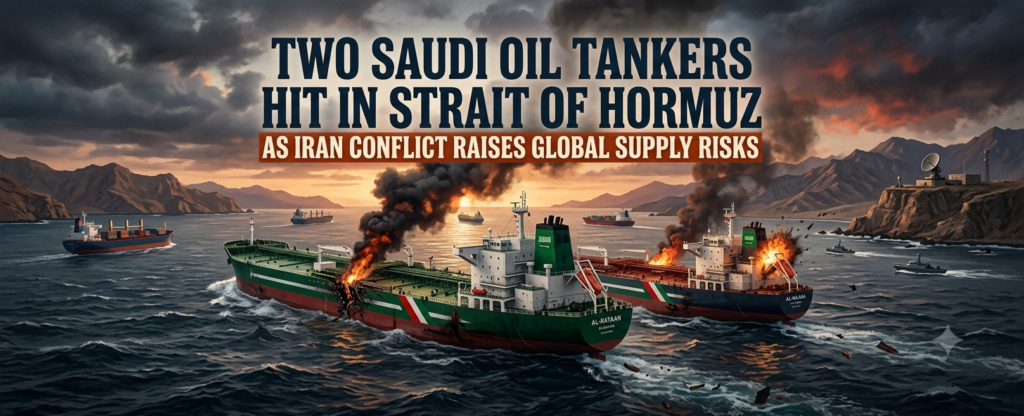
Two large oil tankers carrying Saudi crude were struck by unidentified projectiles while travelling through the Strait of Hormuz, adding another major threat to one of the world’s most important energy corridors and increasing concerns over global oil supplies.
The incidents occurred within minutes of each other near Khasab, Oman, according to Reuters. The vessels involved were the Saudi-flagged Sidr and the Liberian-flagged Senegal Prosperity. Both tankers had loaded around 2 million barrels of Saudi crude each from the Juaymah terminal in Saudi Arabia the previous week. No casualties were reported following the attacks.
The identity of those responsible for the attacks has not been established. Maritime authorities confirmed projectile-related incidents, while no group had immediately claimed responsibility. The attacks nevertheless come against the backdrop of the ongoing US-Iran conflict and heightened military activity around the strategic waterway.
Strait of Hormuz Becomes a Major Energy Risk
The latest tanker attacks highlight the growing risks facing commercial shipping through the Strait of Hormuz. The waterway is a critical route for international energy supplies, and disruption to tanker traffic can quickly affect crude prices and shipping costs.
Recent vessel-tracking data showed that traffic through the strait remained extremely limited. On Monday, only five vessels were recorded transiting the waterway, compared with a 10-day average of about 14. No liquid tankers were recorded among those vessels.
The combination of reduced shipping activity and attacks on oil tankers could further increase the risk premium in crude markets. Traders are likely to closely monitor whether more vessels are attacked, diverted or prevented from crossing the strait.
Oil Prices Face Fresh Upside Pressure
The tanker incidents have added to already elevated concerns about global oil supplies. Brent crude prices moved higher following the attacks, with market participants increasingly worried that continued military escalation could disrupt the movement of crude from the Gulf region.
A prolonged disruption would have consequences far beyond the Middle East. Higher transportation and insurance costs could raise the delivered price of crude, while reduced tanker availability could make it more difficult for refiners to secure supplies.
For major oil-importing economies, a sustained increase in crude prices could also contribute to higher inflation. That could complicate monetary-policy decisions for central banks already balancing inflation risks against economic growth.
Impact on Forex, Gold and Global Markets
The latest developments are also important for Forex and financial-market traders. Rising geopolitical risk and higher energy prices can increase volatility across currencies and commodities.
The US dollar could attract safe-haven demand if investors become increasingly concerned about a broader regional conflict. At the same time, higher oil prices could strengthen inflation expectations and influence interest-rate expectations in major economies.
Gold may also remain sensitive to developments in the Middle East. Although higher US Treasury yields and a stronger dollar can pressure bullion, escalating geopolitical uncertainty can increase demand for gold as a defensive asset.
Oil-sensitive currencies and emerging-market currencies could face additional volatility if crude prices rise sharply. Equity markets may also come under pressure if investors begin pricing in a prolonged disruption to global energy supplies.
What Traders Should Watch Next
The next major market catalyst will be whether tanker attacks continue and whether commercial shipping through the Strait of Hormuz can return to normal levels.
Traders will be watching crude inventories, tanker movements, shipping insurance costs, Iranian military activity and any diplomatic efforts aimed at reopening the waterway.
For financial markets, the key risk is whether the latest incidents remain isolated or develop into a wider disruption of Gulf energy exports. If shipping activity continues to decline, oil prices could remain elevated while the US dollar, gold and global equities experience increased volatility.
With the Strait of Hormuz remaining under severe pressure, developments in the region are likely to remain a major driver for oil markets, Forex, commodities and global financial markets in the near term.
