

Gold Stabilizes Near $4,300 After Sharp Fall as Traders Await Fed Rate Decision
Gold prices were largely steady near the $4,300-per-ounce level on Tuesday after falling sharply in the previous session, as investors waited for the Federal Reserve’s September policy decision and fresh guidance on the path for interest rates. Spot gold was down around 0.2% at $4,287.69 an ounce by 07:13 GMT after touching its lowest level […]
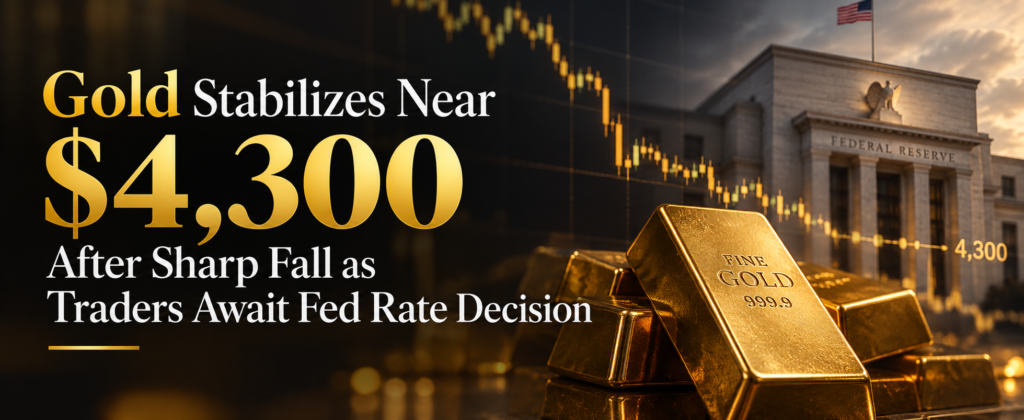
Gold prices were largely steady near the $4,300-per-ounce level on Tuesday after falling sharply in the previous session, as investors waited for the Federal Reserve’s September policy decision and fresh guidance on the path for interest rates.
Spot gold was down around 0.2% at $4,287.69 an ounce by 07:13 GMT after touching its lowest level since August 7 on Monday. US gold futures were also lower, falling around 0.5% to $4,328.10.
The precious metal is facing a challenging combination of higher oil prices, stronger inflation expectations, elevated Treasury yields and a firmer US dollar ahead of the Fed’s September 15–16 meeting.
Gold Remains Under Pressure Before the Fed Decision
Markets are heavily expecting the Federal Reserve to raise its benchmark interest rate by 25 basis points, taking the target range to 3.75%–4.00%. Reuters reported that 85% of economists in its latest poll expected a quarter-point increase, while futures markets were also pricing a very high probability of a hike.
For gold, however, the size of the rate increase may be less important than how Fed Chair Kevin Warsh describes future policy.
IG market analyst Tony Sycamore said a signal that the September hike could mark the beginning of a meeting-by-meeting tightening cycle would likely weigh further on gold. A more measured approach, by contrast, could provide support for precious metals and broader risk sentiment.
Why Higher Rates Can Hurt Gold
Gold does not pay interest, so higher interest rates increase the opportunity cost of holding bullion compared with interest-bearing assets such as US Treasury securities.
That relationship has become particularly important as the US 10-year Treasury yield has moved above 5%, reaching its highest level since 2007. Higher bond yields can make fixed-income assets more attractive while simultaneously increasing pressure on non-yielding gold.
Oil Prices Add a New Inflation Risk
Another major factor influencing gold is the renewed rise in crude oil prices.
Brent and West Texas Intermediate futures have remained above $100 a barrel as Middle East supply disruptions continue. Concerns surrounding attacks on Saudi energy infrastructure and shipping risks around the region have pushed energy prices higher.
Higher energy costs can create a difficult environment for central banks. Oil-driven inflation may force policymakers to keep monetary policy tighter for longer, even if higher borrowing costs begin to weigh on economic growth.
For gold investors, this creates conflicting forces. Gold can benefit from inflation and geopolitical uncertainty, but it can come under pressure when those same developments cause interest-rate expectations and bond yields to rise.
US Dollar Strengthens Ahead of Fed
The US dollar has also provided a headwind for gold. The currency has strengthened alongside rising Treasury yields and increased expectations for tighter Federal Reserve policy.
Because gold is priced in dollars, a stronger US currency can make bullion more expensive for buyers using other currencies and potentially reduce demand.
The dollar’s direction following the Fed announcement will therefore be crucial for XAU/USD. A hawkish message could push the dollar and yields higher, while a more cautious policy outlook could create room for gold to recover.
What Comes Next for Gold?
The immediate focus for traders is the Fed’s decision and subsequent policy guidance. Markets will be looking for clues about whether policymakers expect another rate increase later in the year or prefer to pause after September.
Recent US inflation data has strengthened the case for tighter policy. Reuters reported that August consumer prices accelerated, while a key measure of underlying inflation recorded its largest monthly increase in four months.
At the same time, geopolitical risks remain elevated, particularly across the Middle East. If oil prices remain high or regional tensions intensify, gold could regain safe-haven demand despite pressure from interest rates.
Key Levels and Market Risks
With spot gold now close to $4,300, traders will watch whether the metal can stabilise after Monday’s selloff. A sustained recovery would suggest buyers are returning, while another move lower could signal that higher yields and a stronger dollar are dominating sentiment.
The Federal Reserve decision on Wednesday is therefore likely to become the next major catalyst for gold. A hawkish message could extend the recent decline, while a less aggressive outlook could help XAU/USD recover.
For now, gold remains caught between its traditional safe-haven role and the pressure created by higher US interest-rate expectations, rising energy prices and elevated bond yields.

Alexander
Alexander is a veteran of the currency markets with over 15 years of experience in institutional trading and risk management. He specializes in the intersection of macroeconomics and regulatory frameworks.
