

Zelenskyy Says Territorial Issue Remains Key as US-Backed Russia-Ukraine Peace Talks Continue
Ukrainian President Volodymyr Zelenskyy has said the territorial question remains a relevant issue in efforts to end the Russia-Ukraine war, highlighting one of the biggest obstacles facing renewed US-backed peace negotiations. Zelenskyy made the comments after meeting US special envoys Steve Witkoff and Jared Kushner in Kyiv on Sunday. The meeting followed a three-hour discussion […]
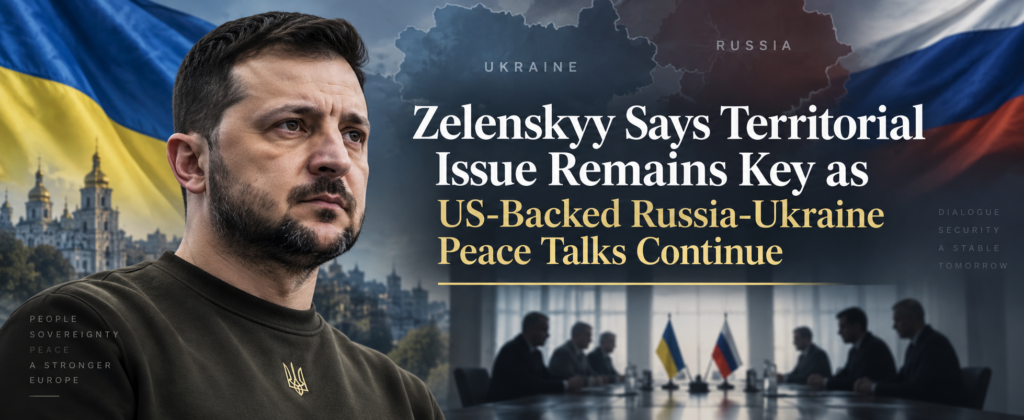
Ukrainian President Volodymyr Zelenskyy has said the territorial question remains a relevant issue in efforts to end the Russia-Ukraine war, highlighting one of the biggest obstacles facing renewed US-backed peace negotiations.
Zelenskyy made the comments after meeting US special envoys Steve Witkoff and Jared Kushner in Kyiv on Sunday. The meeting followed a three-hour discussion between the same US representatives and Russian President Vladimir Putin in Moscow. Washington is attempting to restart negotiations between Russia and Ukraine after previous diplomatic efforts failed to produce a comprehensive settlement.
Zelenskyy described the discussions with the US delegation as substantive and said restarting the negotiation process was important. However, the continued focus on territory shows that major political questions remain unresolved.
Territorial Issue Remains a Major Obstacle
Territory has consistently been one of the most difficult issues in Russia-Ukraine negotiations. Moscow and Kyiv continue to hold sharply different positions over areas occupied or claimed by Russia.
Zelenskyy’s latest comments suggest that any potential peace framework will have to address the territorial question rather than simply focus on a temporary ceasefire. The Ukrainian president has also stressed the importance of security guarantees and Ukraine’s long-term security arrangements.
The US delegation’s discussions in Kyiv reportedly covered not only the potential peace process but also military and energy support for Ukraine ahead of winter. US officials have described the talks as encouraging, but there has been no announcement of a breakthrough or final agreement.
US Pushes to Revive Peace Negotiations
The latest diplomatic activity represents a renewed effort by the Trump administration to bring Russia and Ukraine back toward direct negotiations.
Witkoff and Kushner’s decision to visit both Moscow and Kyiv is significant because Washington is attempting to hear the positions of both sides directly. After meeting Putin, the envoys travelled to Kyiv for discussions with Zelenskyy and Ukrainian officials.
Witkoff has expressed hope that further negotiations involving the United States, Ukraine and European countries could be arranged soon. The US has indicated that it wants a diplomatic rather than military solution to the conflict.
However, previous rounds of diplomacy have shown how difficult it is to convert political discussions into an agreement. Territorial demands, security guarantees and the conditions for a lasting ceasefire remain major points of disagreement.
Ukraine War Keeps Geopolitical Risks Elevated
Despite the renewed diplomatic push, fighting has not stopped. Recent reporting indicates that military activity and airstrikes continue, while both sides remain focused on strengthening their positions.
Zelenskyy has also warned that the war could continue into the winter if negotiations fail to produce meaningful progress. This adds another layer of urgency to the latest diplomatic efforts because winter conditions could increase pressure on Ukraine’s energy infrastructure and civilian population.
For financial markets, the continuation of the war remains an important source of geopolitical uncertainty.
Oil and European Markets in Focus
Any credible progress toward a Russia-Ukraine peace agreement could have implications for energy markets, particularly European energy sentiment.
Russia remains a major global energy producer, meaning a sustained reduction in geopolitical tensions could eventually lower some risk premiums in crude oil and European energy markets. A prolonged conflict, on the other hand, could maintain concerns about supply disruptions and energy security.
European currencies could also respond to developments in the peace process. A meaningful improvement in geopolitical conditions could support risk sentiment and potentially benefit the euro, while renewed military escalation could increase demand for traditional safe-haven assets such as the US dollar, Japanese yen and Swiss franc.
Gold could also remain sensitive to the direction of the conflict. A credible peace process may reduce geopolitical demand for the precious metal, although broader factors such as Federal Reserve policy, US Treasury yields and Middle East tensions remain important drivers.
Forex Traders Await Concrete Progress
For Forex markets, the key question is whether the latest diplomatic meetings can move beyond discussions and produce a workable framework.
Traders should monitor further meetings between US, Russian and Ukrainian officials, developments around territorial demands, security guarantees and any announcement of direct trilateral negotiations.
At present, the latest talks represent progress in diplomacy rather than a completed peace settlement. The territorial issue remains relevant, and that means geopolitical risk has not disappeared.
For The Finance Chronicles, the development is highly relevant because it connects the Russia-Ukraine conflict with oil prices, European markets, the euro, gold and safe-haven currencies. If negotiations make genuine progress, markets could price in lower geopolitical risk. If talks stall or fighting intensifies, those risk premiums could quickly return.
The next round of diplomatic discussions will therefore be critical in determining whether the latest US-led initiative can turn renewed dialogue into a sustainable path toward peace.
