

UAE Calls for Free Hormuz Access as Oil Supply Risks Keep Global Markets on Edge
The United Arab Emirates has called for the Strait of Hormuz to be treated as an international waterway, highlighting growing concerns over freedom of navigation and the potential impact of continued regional tensions on global energy markets. UAE Presidential Adviser Anwar Gargash said on September 7 that the strategic waterway should not be controlled or […]
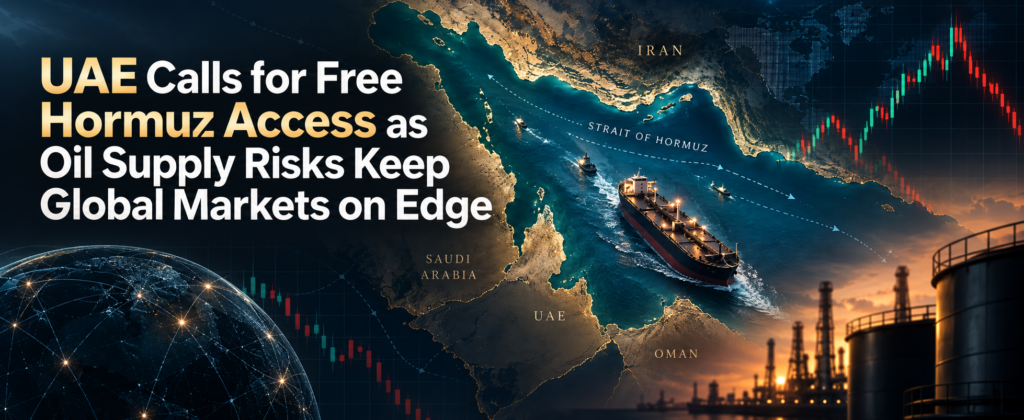
The United Arab Emirates has called for the Strait of Hormuz to be treated as an international waterway, highlighting growing concerns over freedom of navigation and the potential impact of continued regional tensions on global energy markets.
UAE Presidential Adviser Anwar Gargash said on September 7 that the strategic waterway should not be controlled or used as leverage by any single state. His comments come as tensions involving Iran and the United States continue to disrupt shipping activity around the Gulf.
The statement is particularly important for financial markets because the Strait of Hormuz is a critical route for international energy shipments. Any prolonged restrictions on tanker movements could increase supply concerns, push crude prices higher and add to inflationary pressure across major economies.
UAE Seeks to Protect Energy Exports
Gargash’s comments came as the UAE outlined measures to reduce its dependence on vulnerable maritime routes. According to Reuters, the UAE is expanding eastern-coast port capacity while strengthening pipelines, rail links and alternative trade corridors to ensure its energy exports and wider economic activity are not held hostage by the conflict.
The UAE has been particularly exposed to the disruption because of its position near the Strait of Hormuz and its importance as a major oil producer and exporter.
Gargash said the UAE’s energy exports and trade would not be held hostage, while also warning that rebuilding trust with Iran could take a long time following attacks and escalating tensions.
Hormuz Disruption Keeps Oil Markets on Alert
The latest development comes as oil markets remain highly sensitive to events around the Gulf.
Reuters reported on September 7 that U.S.-Iran maritime tensions had escalated after U.S. strikes on Iranian oil tankers, followed by Iranian retaliatory actions involving vessels in the Strait of Hormuz. Major Gulf stock markets remained relatively resilient, but investors continued to monitor the potential effect on energy supplies and regional trade.
For crude traders, the key concern is whether the latest escalation will result in a sustained reduction in tanker traffic.
If shipping through Hormuz becomes more difficult, the resulting supply risk could keep Brent and WTI prices elevated. Conversely, any diplomatic progress that guarantees reliable commercial access could reduce the geopolitical premium embedded in crude prices.
Why Forex Traders Are Watching Hormuz
The Strait of Hormuz is also becoming an increasingly important issue for Forex markets.
Higher oil prices can raise inflation expectations in major economies because energy costs feed into transportation, manufacturing and consumer prices. If inflation remains elevated, central banks could face less room to reduce interest rates.
That dynamic could support the U.S. dollar if investors increase expectations for tighter monetary policy or move toward safe-haven assets during periods of geopolitical stress.
At the same time, higher energy prices could pressure oil-importing economies and their currencies. Asian and European currencies could therefore remain sensitive to changes in crude prices and the outlook for energy supplies.
Gold may also benefit from renewed geopolitical uncertainty as investors seek defensive assets. However, the direction of gold will also depend on movements in U.S. Treasury yields and the dollar.
Global Markets Await a Clearer Path
The UAE’s call for international access to Hormuz adds to growing diplomatic pressure for the waterway to remain open to commercial shipping.
The situation remains fluid. Iran is also preparing to announce a new restricted maritime zone and a new shipping corridor, according to current reporting, adding another layer of uncertainty for tanker operators and energy traders.
For investors, the immediate focus will be on whether diplomatic efforts can restore predictable shipping conditions or whether military tensions continue to restrict traffic.
A sustained improvement in navigation through the Strait could ease oil prices and reduce inflation concerns. Further escalation, however, could have the opposite effect, keeping crude prices elevated and increasing pressure on global central banks.
For Forex traders, the Hormuz story is therefore no longer only a regional geopolitical issue. It has become a key market variable linking oil prices, inflation, interest-rate expectations, the U.S. dollar, gold and global risk sentiment.
