

Saudi Arabia Seeks Air-Defence Support as Missile Interceptor Shortages Raise Oil-Supply Risks
Saudi Arabia is reportedly seeking additional air-defence support from regional and Western allies as continued attacks by Iran-aligned Houthi forces put pressure on the kingdom’s missile-interceptor supplies. Two regional officials cited by the Associated Press said Riyadh has asked France, Britain, Pakistan and Egypt to deploy air-defence capabilities to help counter missiles and drones launched […]
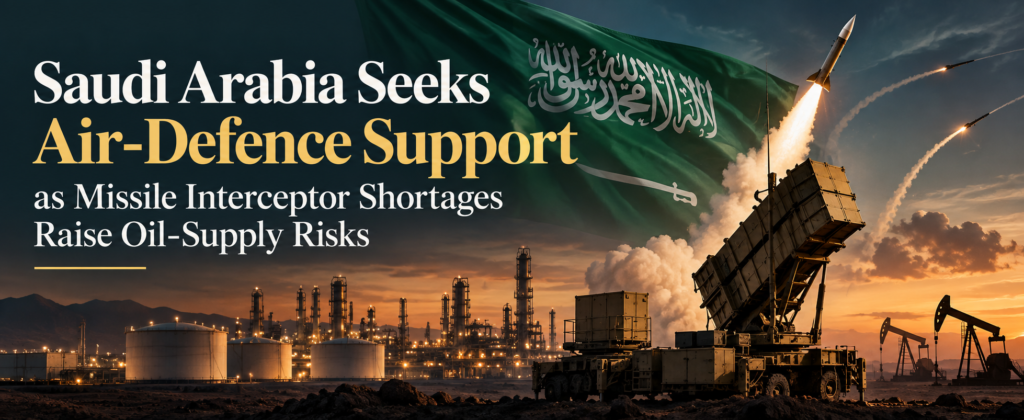
Saudi Arabia is reportedly seeking additional air-defence support from regional and Western allies as continued attacks by Iran-aligned Houthi forces put pressure on the kingdom’s missile-interceptor supplies.
Two regional officials cited by the Associated Press said Riyadh has asked France, Britain, Pakistan and Egypt to deploy air-defence capabilities to help counter missiles and drones launched by the Houthis and other Iran-backed groups. The reported requests come as Saudi Arabia faces increasing threats against military positions, civilian areas and energy infrastructure.
For financial markets, the development matters because Saudi Arabia remains a critical supplier to global energy markets. Any prolonged threat to its oil infrastructure or export routes could add another layer of risk to Brent and WTI crude prices.
Saudi Air-Defence Capacity Faces Pressure
The reported shortage highlights the growing demands being placed on Saudi Arabia’s air-defence systems during the latest escalation in Yemen.
The regional officials told AP that Riyadh is looking for additional interceptor capacity from allied countries as Houthi missile and drone attacks continue. However, the Saudi government has not publicly confirmed the reported requests in detail, and several countries named in the reports have not confirmed that they have committed military assets.
That distinction is important because the current information is based primarily on regional officials familiar with the situation, rather than a detailed public Saudi defence announcement.
Why Interceptors Matter for Energy Security
Saudi Arabia’s air-defence requirements extend beyond protecting military installations.
The kingdom has major oil-producing, refining and export infrastructure spread across the country. Drone and missile attacks against these facilities can create operational disruptions even when physical damage is limited.
The latest concerns therefore connect military preparedness directly with the security of global energy supplies.
Houthi Pressure Expands Beyond Yemen
The Saudi request comes during a broader escalation along Yemen’s Red Sea coast.
The Houthis have recently expanded their control around strategically important areas near the Bab el-Mandeb Strait, a major maritime chokepoint connecting the Red Sea and Gulf of Aden. Reuters reported that the group has captured territory and islands that increase its proximity to the shipping corridor.
The development is particularly important for Saudi Arabia because the kingdom relies on Red Sea infrastructure as an alternative route for some oil exports.
Saudi Arabia’s East-West Pipeline has already faced disruption after attacks, increasing attention on the country’s ability to maintain alternative export capacity while shipping through the Strait of Hormuz remains under pressure.
Bab el-Mandeb Adds Another Oil-Market Risk
Bab el-Mandeb is strategically important for global commodity and container shipping. A significant increase in security risks can force vessels to seek alternative routes, raise insurance premiums and increase fuel and freight costs.
The wider disruption has already affected energy markets. Reuters has reported that Houthi advances and Saudi infrastructure attacks are contributing to concerns over oil supply routes and global energy security.
Oil Markets Remain Sensitive to Saudi Disruptions
The latest air-defence concerns come while crude prices are already elevated.
Brent crude has remained above $100 a barrel, while WTI has also traded at historically elevated levels during the current Middle East supply shock. Traders are closely watching whether attacks cause lasting reductions in Saudi production, refining or exports.
The importance of Saudi Arabia means even temporary disruptions can influence the global supply outlook.
Higher Risk Premium Could Keep Brent Volatile
Oil traders generally price a geopolitical risk premium when major producing regions face attacks or threats to infrastructure.
If Saudi Arabia can protect production facilities and maintain export routes, the immediate physical supply impact could remain limited. But repeated attacks, prolonged pipeline outages or restrictions affecting Red Sea shipping could increase the risk premium in Brent and WTI.
For consumers and businesses, sustained higher oil prices can also raise transportation, manufacturing and logistics costs.
Allied Support Could Influence Regional Security
Saudi Arabia’s reported outreach to France, Britain, Pakistan and Egypt reflects the kingdom’s need for additional layers of air-defence protection.
The AP reported that no country had publicly committed military support at the time of its report. Britain has described its defence relationship with Saudi Arabia as close, while Pakistan has previously reaffirmed support for Saudi security.
The situation also comes after Saudi Arabia, Pakistan and Türkiye strengthened their defence relationship through a new pact, although officials in Pakistan and Türkiye have indicated that Riyadh had not formally requested assistance under that agreement at the time of reporting.
This means the practical response from potential partners remains uncertain.
Inflation Risks Extend Beyond the Middle East
The potential economic consequences extend beyond oil traders.
Higher crude prices can feed into petrol, diesel, freight and production costs. If energy prices remain elevated for an extended period, they can add to headline inflation and complicate monetary-policy decisions for major central banks.
That makes Saudi security developments relevant to the US dollar, Treasury yields, gold and global equities as well as the oil market.
For emerging-market economies that depend heavily on imported energy, sustained crude-price increases can also increase import bills and place pressure on local currencies.
Shipping Costs Could Add to the Shock
Higher maritime-security risks can compound the impact of expensive crude.
If vessels require longer routes or face higher insurance premiums, the delivered cost of energy can rise even without a comparable increase in the underlying oil price. That creates another channel through which Middle East security developments can affect global inflation.
What Traders Should Watch Next
Markets will be watching Saudi oil production, East-West Pipeline repairs, Bab el-Mandeb shipping traffic, Houthi attacks, allied air-defence deployments, Brent crude and WTI prices.
The most important question is whether Saudi Arabia’s reported interceptor shortage results in measurable disruptions to energy infrastructure or remains primarily a defensive-capability issue.
For now, the reported Saudi outreach signals that missile and drone threats are placing greater pressure on the kingdom’s security resources. If additional air-defence support helps protect energy facilities and shipping routes, some supply concerns could ease. If attacks continue to overwhelm available defences, however, the risk premium in oil and freight markets could remain elevated.
For The Finance Chronicles, the broader market story is clear: Saudi air-defence pressure is becoming another variable for global energy markets, alongside the continuing risks around Hormuz and Bab el-Mandeb.

Alexander
Alexander is a veteran of the currency markets with over 15 years of experience in institutional trading and risk management. He specializes in the intersection of macroeconomics and regulatory frameworks.
